Why Most Flight Schools Do Not Have FAA Examining Authority
In FAA Part 141 flight training, Examining Authority is one of the most significant approvals a school can receive.
If you are unfamiliar with how this approval works within FAA training regulations, we explain the structure in detail in our article on how FAA Part 141 Examining Authority works.
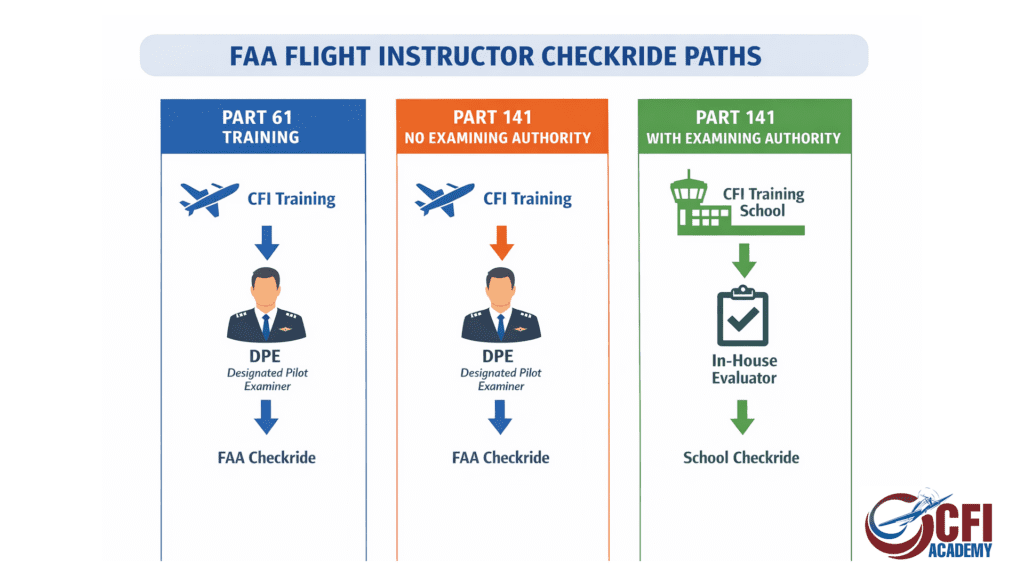
It allows a qualified Part 141 school to conduct End-of-Course practical tests internally rather than relying on external Designated Pilot Examiners (DPEs).
While many students assume this capability is common, the reality is quite different.
Most flight schools in the United States do not hold Examining Authority.
Understanding why helps illustrate how the FAA evaluates training organizations and why this approval is granted only in limited circumstances.
What Examining Authority Requires
Under FAA Part 141, Examining Authority may be granted to schools that demonstrate a consistent and well-structured training environment.
The FAA evaluates multiple factors before granting this approval, including:
Demonstrated regulatory compliance
Standardized training procedures
Effective internal stage-check and evaluation systems
Reliable record-keeping and oversight
Consistent student performance over time
These elements must be proven through operational history and FAA oversight before the privilege is considered.
How Examining Authority Improves Training Consistency
When examining authority is implemented properly, it allows a training organization to maintain consistent evaluation standards throughout the training process. Instead of relying entirely on external examiner availability, the school can ensure that end-of-course evaluations align closely with the curriculum and instructional philosophy used during training. This consistency helps reinforce training standards and reduces variability in how instructor candidates are evaluated.
Why Many Schools Do Not Pursue It
Not every flight school is structured in a way that supports Examining Authority.
Many schools also operate primarily under Part 61 training structures, where practical tests are always conducted by external examiners. We explain the differences between these training environments in our guide to Part 61 vs Part 141 flight instructor training.
Even among Part 141 schools, pursuing Examining Authority requires a level of administrative structure and instructional standardization that not every organization chooses to maintain.
The process also requires sustained FAA evaluation and continued compliance once granted.
FAA Oversight and Institutional Trust
Examining Authority is ultimately about institutional trust.
The FAA must have confidence that a school’s internal evaluation system produces pilots who meet certification standards consistently.
For that reason, the approval typically reflects:
Long-term operational stability
Strong instructional oversight
Proven training systems
It is not granted automatically with Part 141 approval and must be earned through demonstrated performance.
What It Means for Students
For students enrolled in an approved course with Examining Authority, the practical test process can be more closely integrated with the school’s training program.
This often provides:
Greater continuity between instruction and evaluation
Reduced dependency on external examiner availability
Structured oversight within the school’s FAA-approved system
However, the underlying certification standards remain exactly the same as any FAA practical test.
For international applicants already training in the United States, Examining Authority can also affect training timelines and SEVIS transfer considerations, which we discuss in our guide on Examining Authority for international flight students.

A Reflection of Training Systems
Examining Authority does not change the standards required to become a certificated instructor or pilot.
Instead, it reflects the FAA’s confidence in the training system responsible for preparing those applicants.
Schools that hold this approval have demonstrated an ability to maintain consistent training quality, documentation, and evaluation procedures under FAA oversight.
Because of the regulatory requirements and operational oversight involved, examining authority remains relatively rare among flight training organizations. When properly implemented, however, it can help improve training consistency and ensure that instructor candidates are evaluated according to the same standards used throughout the training program.
CFI Academy was recently granted FAA approval for this capability, which you can read about in our announcement regarding CFI Academy’s Part 141 Examining Authority approval.
Flight Instructor Training Resources
This article is part of the broader instructional resources published by CFI Academy for pilots pursuing certification as flight instructors.