Instrument Rating Training
Build real-world IFR skills with structured training designed for pilots progressing toward commercial and professional aviation.
Instrument training is where pilots transition from basic flying to true operational capability. At CFI Academy, this phase is treated as a critical step in a larger training path, and not an isolated rating.
What's Included
- Ground training
- Flight training
- Pre/Post Briefings
- FAA Approved Online Classes
- Your Pace or Fast (Accelerated)
- Airplane rental for the training and the checkride
Fixed Cost
What Is an Instrument Rating?
An instrument rating allows you to fly in reduced visibility and operate under instrument flight rules (IFR). More importantly, it develops:
- precision flying skills
- situational awareness
- workload management
- decision-making under pressure
This is where pilots begin to operate at a professional level.
If you are planning long-term progression, understanding how to become an airline pilot early will help you structure your training correctly.
Who This Training Is Designed For
This program is ideal for:
- Private pilots continuing toward commercial pilot certification
- Pilots pursuing an airline or professional pilot career
- Pilots who want structured IFR training, and not just checkride prep
This program is not designed for occasional or purely recreational flying. It is built for pilots who intend to progress.
Most students in this phase are already committed to a structured professional pilot training path rather than isolated ratings.
You can review the official FAA instrument rating requirements to better understand the eligibility and training structure.
Most students complete instrument training in 4 to 8 weeks depending on schedule and consistency.
Instrument training typically costs between $8,000 and $12,000 depending on training pace and aircraft used.
Yes. An instrument rating is a required step for commercial and airline pilot training.
Yes, but consistent training is strongly recommended to reduce total cost and improve retention.
Part 141 offers structured training with stage checks, while Part 61 is more flexible. The best option depends on your goals. If you want to learn more about part 141 vs part 61 training, you can read it in this article.
Part 61 vs Part 141 Instrument Training
Instrument rating training can be completed under either Part 61 or Part 141.
At CFI Academy, many students benefit from Part 141 training due to:
- structured lesson progression
- standardized instructor methodology
- stage checks that ensure real proficiency
- better preparation for commercial and instructor training
We recommend the structure that produces the best long-term outcome, not just the fastest completion.
👉 Learn more about Part 61 vs Part 141 flight training.
Why Part 141:
- Structured, stage-based progression
- Standardized curriculum
- Consistent instructor methodology
- Built-in quality control through stage checks
- Better preparation for advanced training
When Part 61 may be appropriate:
- Flexible scheduling needs
- Prior training or experience
- Specific individual circumstances
We don’t force a structure; we recommend the one that produces the best outcome for your situation.
We evaluate your situation and recommend the best path, not a one-size-fits-all approach.
Why Instrument Training Is Critical
Many pilots underestimate this phase. In Instrument Rating you will learn the rules of IFR flying. IFR certification, and subsequently Commercial Pilot certification is the core of all airline pilot flight operations.
Instrument training is where:
- weak habits are exposed
- precision becomes mandatory
- real-world decision-making begins
Poor instrument training leads to:
- difficulty in commercial training
- higher total training cost
- weaker performance later
Strong instrument training creates:
- confidence
- efficiency
- long-term success
Instrument Rating Program Overview
Training Includes
- IFR ground training (primarily online, instructor-supported)
- Flight training under instrument conditions
- Simulated and real-world scenarios
- Stage checks (Part 141 structure)
- Checkride preparation
Aircraft Options
Cessna 172 or 182, / Piper PA-28
Typical Timeline
- Accelerated: 2-4 weeks
- Standard: 4-8 weeks
Why Train at CFI Academy
CFI Academy is not a typical flight school.
Since 1998, our primary focus has been training flight instructors. That focus directly impacts how we train private pilot students.
You will:
- deeper understanding of IFR concepts
- better teaching-quality instruction
- stronger preparation for advanced training
We don’t just train you to pass a checkride.
We train you to become a better professional pilot long-term.
This is the same philosophy we apply across all of our flight instructor training programs, which is why our students are better prepared as they progress.
How Long Does Instrument Rating Training Take?
Your timeline depends on consistency and schedule.
Typical timelines:
- Accelerated: 2-4 weeks (full-time, prepared students)
- Standard: 4-8 weeks
The most important factor is training consistency, not just total hours.
Your Training Path Starts Here
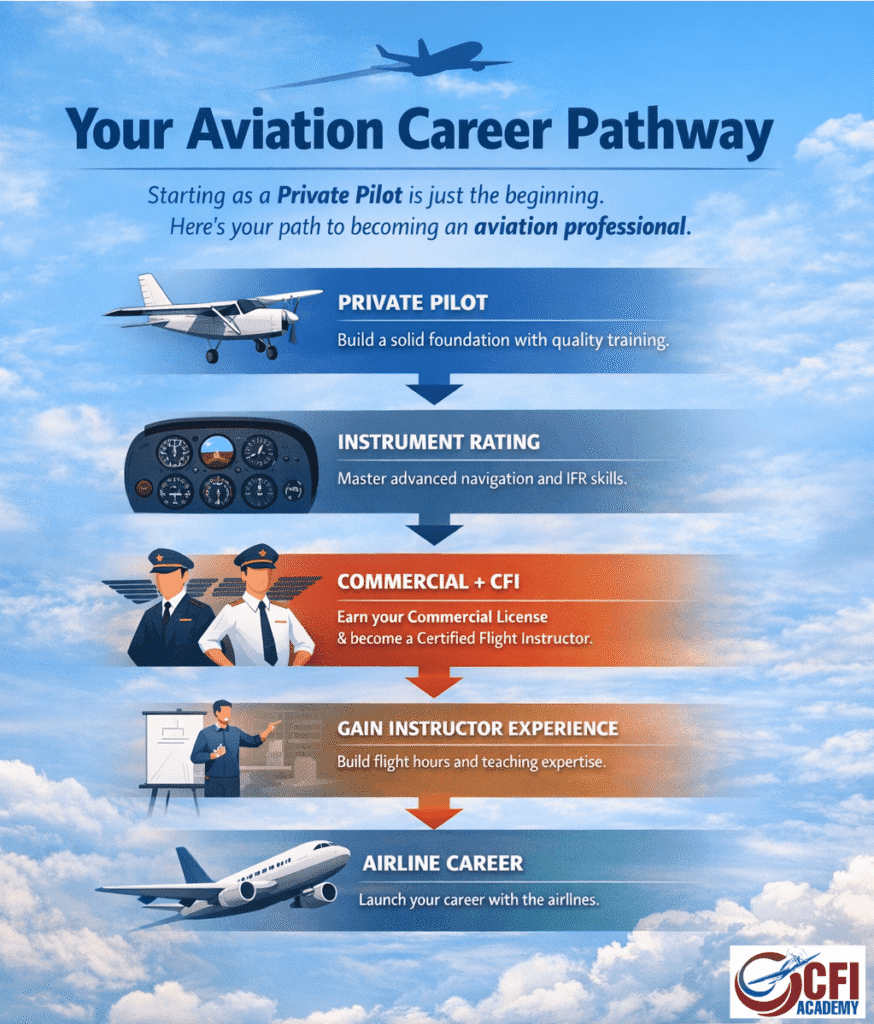
Private pilot training is only the first step. A typical progression:
Private Pilot
→ Instrument Rating
→ Commercial Pilot
→ Flight Instructor (CFI)
→ Airline Career
Instrument Rating Cost
Estimated total investment:
Approximately $8,000-$12,000*
*This is an estimate. Actual cost depends on:
- your starting proficiency
- training pace
- consistency of schedule
What matters more than price:
The quality of your foundation.
Poor early training leads to:
- delays later
- higher total cost
- weaker performance in advanced courses
Many pilots explore flight training financing options to manage the investment while maintaining consistent training.
Your Next Step After Private Pilot
Instrument Rating training typically follows private pilot training as the next step in your progression.
From here, most students continue into:
- Commercial Pilot
- Flight Instructor (CFI)
- Professional Pilot Programs
Before deciding your next move, review the smartest path to becoming an airline pilot.
Many students also evaluate CFI vs multi-engine first when planning their next phase.
Planning Your Training
Before starting, most students want clarity on:
- financing options
- timeline to career
- whether to combine training phases
- how to structure the full path
👉 Explore flight training financing options
👉 Learn how to earn a college degree while training (UVU)
Start With a Training Evaluation
Before enrolling, we take the time to understand:
- your background
- your goals
- your long-term plan
This ensures we recommend the right training structure from the start.
This same philosophy is applied across all of our flight training courses, which is why our graduates are better prepared.
Since 1998
CFI Academy has operated with a singular focus:
training professional flight instructors.
That focus shapes every program we offer, including instrument rating training.