Spin Training for CFI Applicants
If you are working toward your Certified Flight Instructor (CFI) certificate, spin training is not optional. It is a specific eligibility requirement for flight instructor applicants in airplanes and gliders, and it is one of the areas that separates a merely prepared applicant from an actually capable instructor.
If you are planning your full CFI path, also read How to Become a Flight Instructor.
What 14 CFR 61.183 Requires
Under 14 CFR § 61.183(i), an applicant for a flight instructor certificate in airplanes or gliders must:
- receive and log flight training in stall awareness, spin entry, spins, and spin recovery procedures, and
- receive a logbook endorsement from an authorized instructor certifying instructional proficiency in those areas.
This is not just “spin awareness.” For the initial flight instructor certificate, the regulation requires actual training and an endorsement attesting that the applicant is competent and possesses instructional proficiency.
The Required Spin Endorsement
The FAA’s current endorsement guidance appears in AC 61-65K. The sample endorsement language for spin training under § 61.183(i) states, in substance, that the applicant has received the required training and has demonstrated competence and instructional proficiency in stall awareness, spin entry, spins, and spin recovery procedures.
That matters because a spin endorsement is not a casual signoff. It is the instructor’s certification that the applicant is ready, competent, and able to teach the subject—not merely survive it.
FAA Guidance: AC 61-67
The FAA’s primary advisory circular on the subject is AC 61-67C, Stall and Spin Awareness Training. That AC explains the required stall and spin awareness training under Part 61 and provides guidance to instructors who give that training.
AC 61-67 is important because it reinforces two practical truths:
- spin training must be conducted in an aircraft that is appropriate and approved for that training, and
- stall/spin instruction is fundamentally about recognition, prevention, correct entry understanding, and proper recovery technique—not thrill seeking.
Too many applicants hear “spin training” and think this is just a box to check. It is not. This is one of the clearest tests of whether a future instructor actually understands angle of attack, coordination, loss of control, and recovery priorities well enough to teach them correctly.
What Happens If You Fail the CFI Checkride in Spin Areas?
This is where applicants need to be realistic.
If you perform unsatisfactorily on the spin task or related spin-recovery instruction during the CFI practical test, the evaluator can issue a Notice of Disapproval for the associated Task. The current Flight Instructor for Airplane Category ACS specifically addresses the spin task and explains that unsatisfactory performance is tied to the failed Task on the practical test.
Once that happens, this is no longer a pride issue. It becomes a certification issue.
Under 14 CFR § 61.49, an applicant who fails a practical test may reapply only after:
- receiving the necessary additional training from an authorized instructor, and
- receiving an endorsement from that instructor stating the applicant is proficient to pass the test.
In plain English: if you bust the CFI practical test on spin-related material, you do not simply “come back and try again.” You need remedial training, and your instructor must be willing to sign you off again.

Why Spin Failures Matter So Much
A weak applicant can sometimes hide weak rote knowledge in other areas for a while. Spin training is harder to fake.
If an applicant is weak in spins, it usually points to one or more deeper problems:
- poor understanding of stall/spin aerodynamics,
- weak rudder and coordination habits,
- poor recovery discipline under pressure,
- inability to explain the maneuver clearly as an instructor, or
- training that was rushed, outsourced, or treated as an afterthought.
That is exactly why this area deserves serious attention. A future instructor who is uncertain, hesitant, or confused in the spin envelope is not ready to be teaching near the edge of controllability.
CFI Academy Standard
Many schools do not conduct spin training in-house. Usually the reason is obvious: it is hard to find instructors who are both qualified and genuinely proficient enough to teach it correctly and confidently.
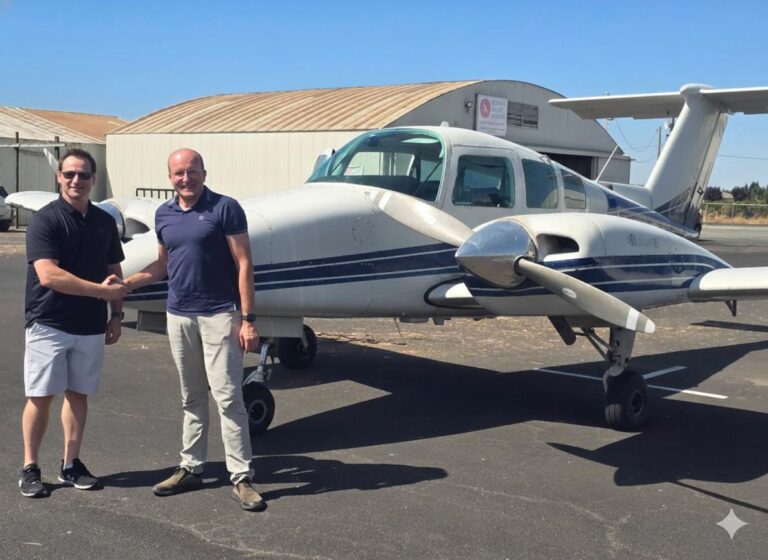
At CFI Academy, spin training is conducted in-house in our own aircraft by our own qualified instructors as part of the CFI training process. We do not treat spin training as a disposable side lesson or an outsourced favor from someone else’s operation.
More importantly, we do not believe this should be taught to the bare minimum. The goal is not to “get the endorsement and move on.” The goal is to make sure the applicant understands the maneuver, can recover correctly, can manage risk, and can teach it with confidence and discipline.
That is the difference between passing a checkride and becoming an instructor people can trust.
Included in Our CFI Course
At CFI Academy, this required spin proficiency training is included in our CFI training program. In other words, if you are training with us for the CFI course, we do not nickel-and-dime you because spin proficiency took real work.
We train to proficiency.
The only practical exception may be aircraft selection and weight considerations. If a larger aircraft is required because of applicant weight or aircraft limitations, there may be an additional aircraft-cost difference depending on what must be used for safe and proper training.
Why Spin Training Actually Makes You Better
Done correctly, spin training gives you more than a regulatory endorsement.
- It sharpens your understanding of loss-of-control aerodynamics.
- It improves your confidence around stalls and incipient spin scenarios.
- It forces correct rudder use and coordination habits.
- It makes you more credible when teaching stall/spin prevention to your own students.
- It helps you think like an instructor, not just like a pilot trying to pass a test.
Yes, spin training can be enjoyable. But that is not the main value. The main value is that it makes you more competent, more disciplined, and more credible as a future flight instructor.
Do Not Wait Until the End
One of the biggest mistakes applicants make is leaving spin training until the very end of CFI prep.
That is backwards.
If you wait too long, you risk discovering late in the process that:
- you are less comfortable with spins than you thought,
- your school does not really teach them well,
- your instructor is not strong in this area, or
- you are not yet ready to teach the maneuver to ACS standard.
Spin training should be approached early enough that weaknesses can be fixed properly—not hidden until checkride day.
Bottom Line
If you are applying for an initial CFI certificate in airplanes, spin training is a regulatory requirement under § 61.183(i), but it is also much more than that. It is one of the clearest indicators of whether your training has been serious, whether your aerodynamics knowledge is real, and whether you are actually developing into an instructor instead of just a checkride applicant.
If you fail in this area on the CFI practical test, the result can be a Notice of Disapproval, followed by additional required training and a new endorsement before retesting. That alone should tell you how seriously the FAA views it.
Train it properly the first time.
Related Reading
- How to Become a Flight Instructor
- Where Should You Do Your CFI Training?
- Passed Your CFI Checkride, Now What?
Train for Your CFI with CFI Academy
If you want CFI training that includes real spin training, real instructional standards, and a program built around producing capable instructors rather than minimum-pass applicants, explore our program here:
Frequently Asked Questions
Is spin training required for all CFI applicants?
Spin training under 14 CFR § 61.183(i) is required for applicants seeking a flight instructor certificate in airplanes or gliders. The applicant must receive and log the training and receive the required endorsement.
Do I need a logbook endorsement for spin training before my CFI checkride?
Yes. The applicant must have a logbook endorsement certifying competence and instructional proficiency in stall awareness, spin entry, spins, and spin recovery procedures.
What advisory circular should I study for CFI spin training?
The FAA’s primary guidance is AC 61-67C, Stall and Spin Awareness Training. It explains the purpose of the training, the risks involved, and the instructional framework behind stall and spin training.
Can I fail my CFI checkride on the spin portion?
Yes. If you perform unsatisfactorily on the associated spin task or fail to teach it to the required standard, the evaluator may issue a Notice of Disapproval for that task.
What happens after a failure in the spin area on the CFI practical test?
Under 14 CFR § 61.49, you must receive additional training from an authorized instructor and a new endorsement before retesting.
Is spin training just a one-time requirement for the endorsement?
No serious instructor should think of it that way. Legally, the endorsement is required for eligibility. Practically, spin training is foundational to teaching stall/spin awareness, loss-of-control prevention, and recovery judgment correctly.
FAA / Regulatory References
Flight Instructor Training Resources
This article is part of the broader instructional resources published by CFI Academy for pilots pursuing certification as flight instructors.
Next Step: Apply for Instructor Training
Instructor training at CFI Academy is selective. Applicants are evaluated for readiness before acceptance into accelerated instructor programs.
Apply for Instructor TrainingApplications are reviewed to determine fit before any training commitment is made.